Intro Video

Aerial Map
Bansilalpet
Intro Video
Aerial Map
Bansilalpet
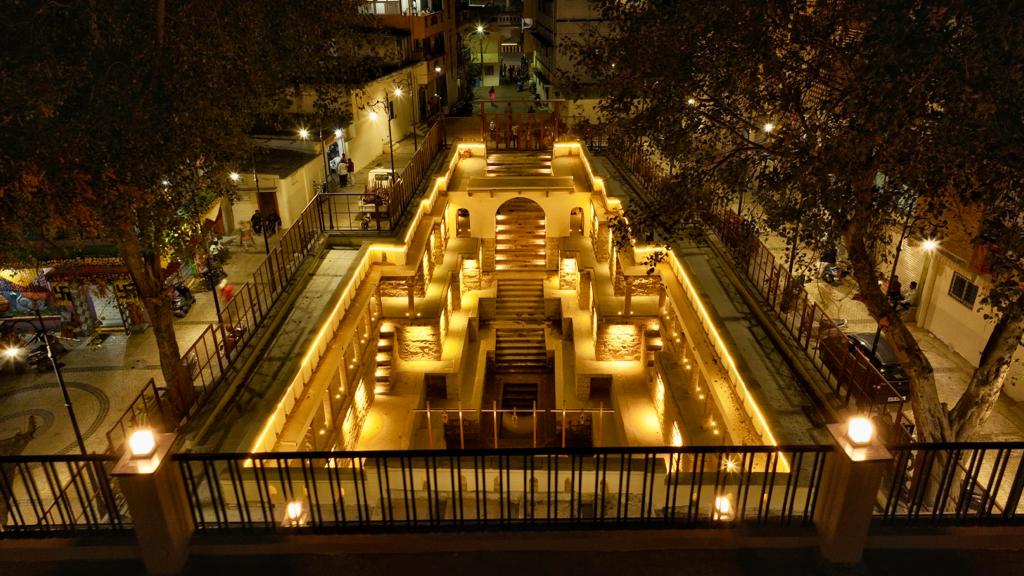
“Reclaimed from being a rubbish dump and restored into a fully functional
water conservation structure, community hub, and tourist attraction.”
– Bansilalpet Stepwell
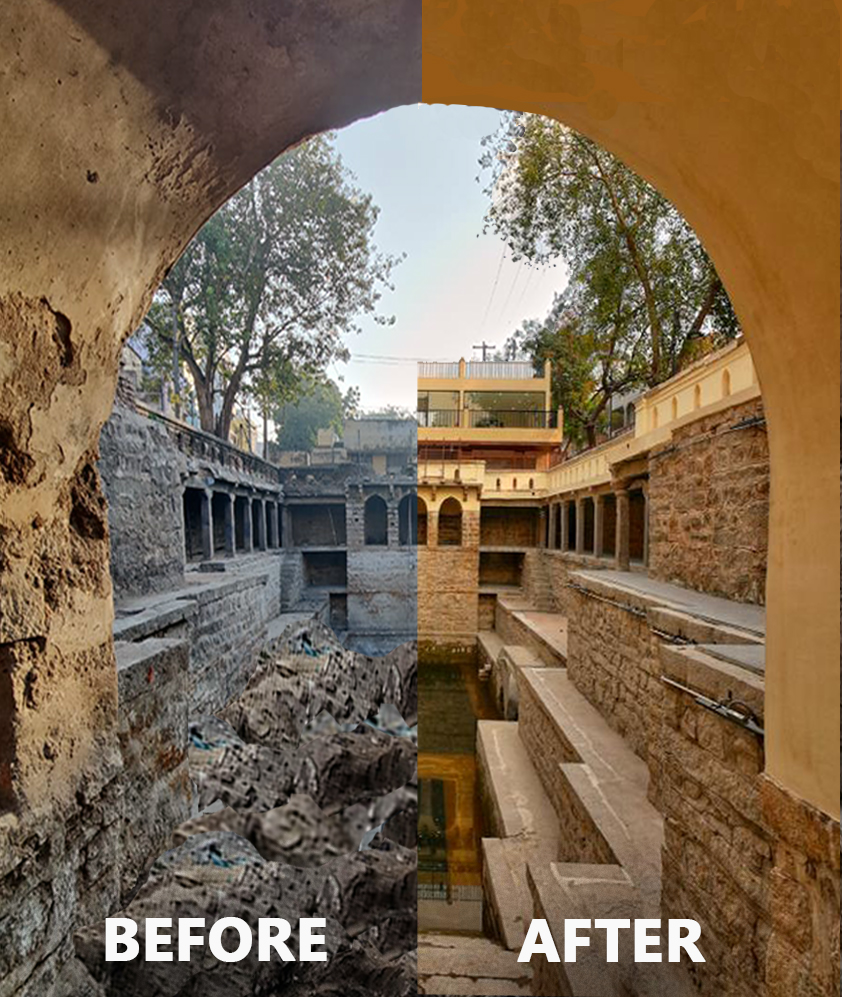
Stepwells are the Indian subcontinent’s insightful contribution towards water conservation, a solution to counter seasonal changes in the water table. As the name suggests, step-wells are subterranean water storage architectural marvels with steps leading down to the water shaft. Characterized by architectural features such as multi-storied levels, archways, galleries, chambers, and orchestrated steps, stepwells uphold profound social cultural, and religious significance.
Stepwells in India were more than water reservoirs—they were community hubs for social gatherings, religious events, and travel shelter. Though some aided irrigation, most served public purposes. Often near temples, they weren’t strictly religious.
With cooler lower levels and rooms above, they offered refuge during heat. Stepwells reflected environmental design, promoted community spirit, and remained secular, inclusive spaces for all.
Do you want to restore any stepwell in your locality?Submit a Stepwell
Stepwells, tanks, and aqueducts showcase India’s ancient water ingenuity. These structures supported communities, reflected cultural values, and offered sustainable solutions—long before modern infrastructure began reshaping our relationship with water.
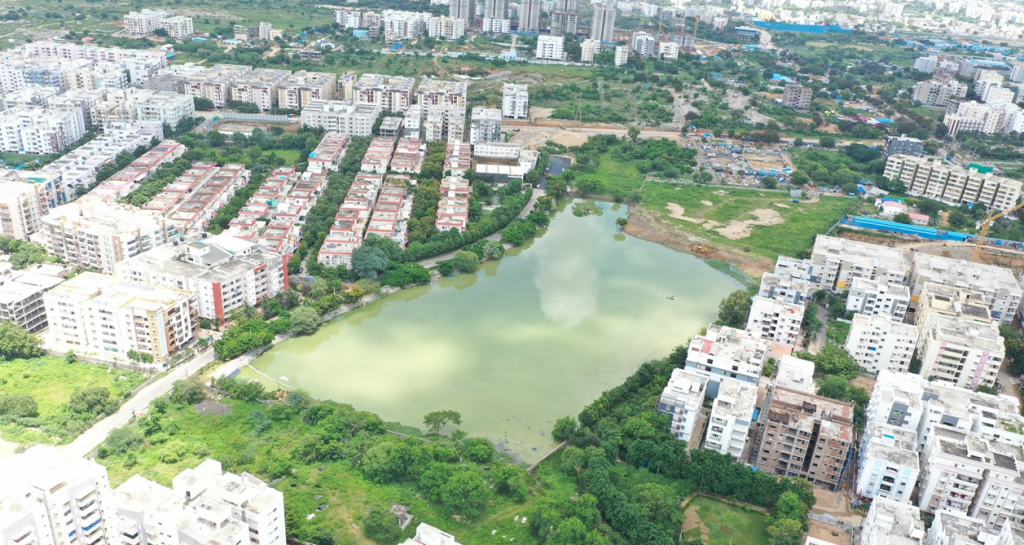
From prehistoric times, civilizations thrived near water, shaping cultures, economies, and defense strategies. Early societies engineered complex water systems for survival, irrigation, and protection. Architectural innovations, such as aqueducts and qanats, revolutionized access.
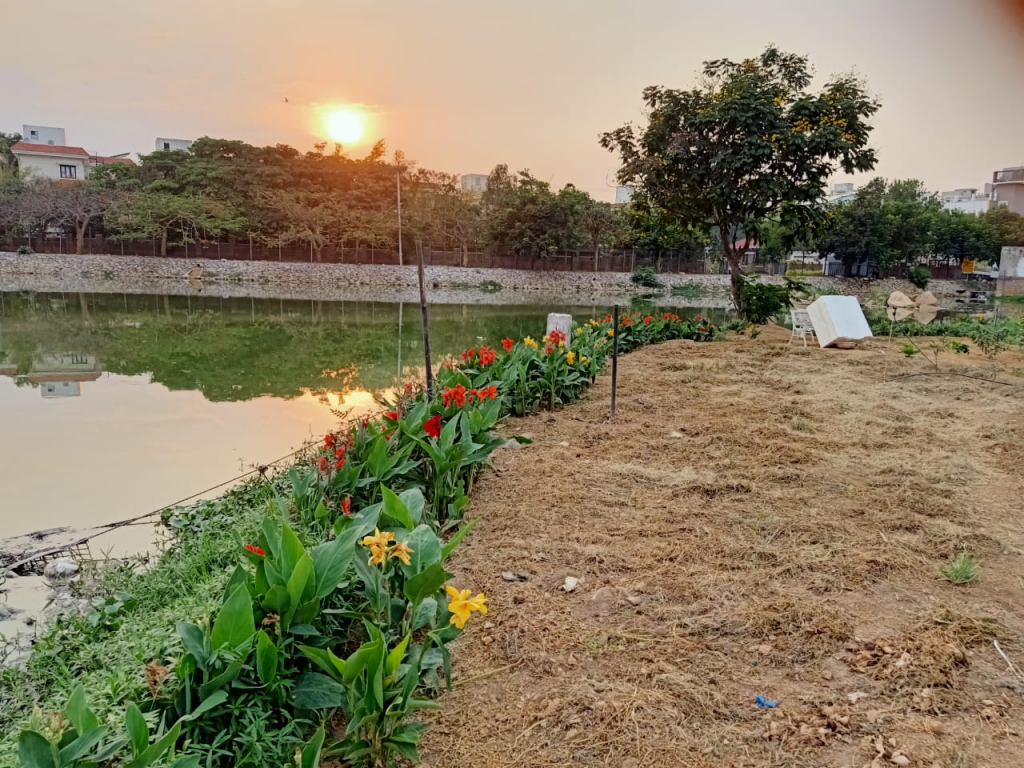
India’s water management dates back to the Mauryan era, with regulations on reservoirs and irrigation. Dynasties like the Cholas and Kakatiyas built vast networks of tanks, lakes, and stepwells, ensuring water conservation. Structures like the Grand Anicut remain functional today.
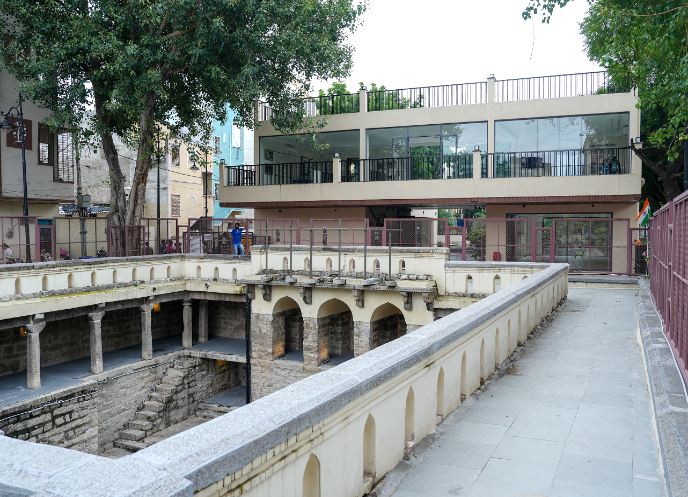
Stepwells, dating to the Indus Valley Civilization, blended function and artistry. Hyderabad, built along the Musi River, had stepwells in homes and public spaces. Though modern infrastructure replaced them, their legacy remains vital for sustainable water management today.
Contributing towards sustainable development by ensuring clean water, better health, sustainable communities, and climate resilience.
SDG 6
SDG 11
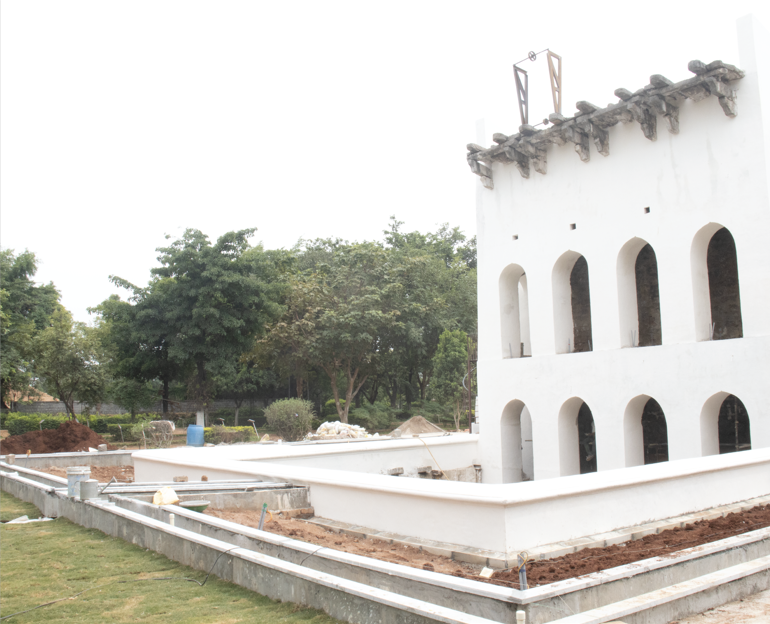
Recovered and Protected Stepwell
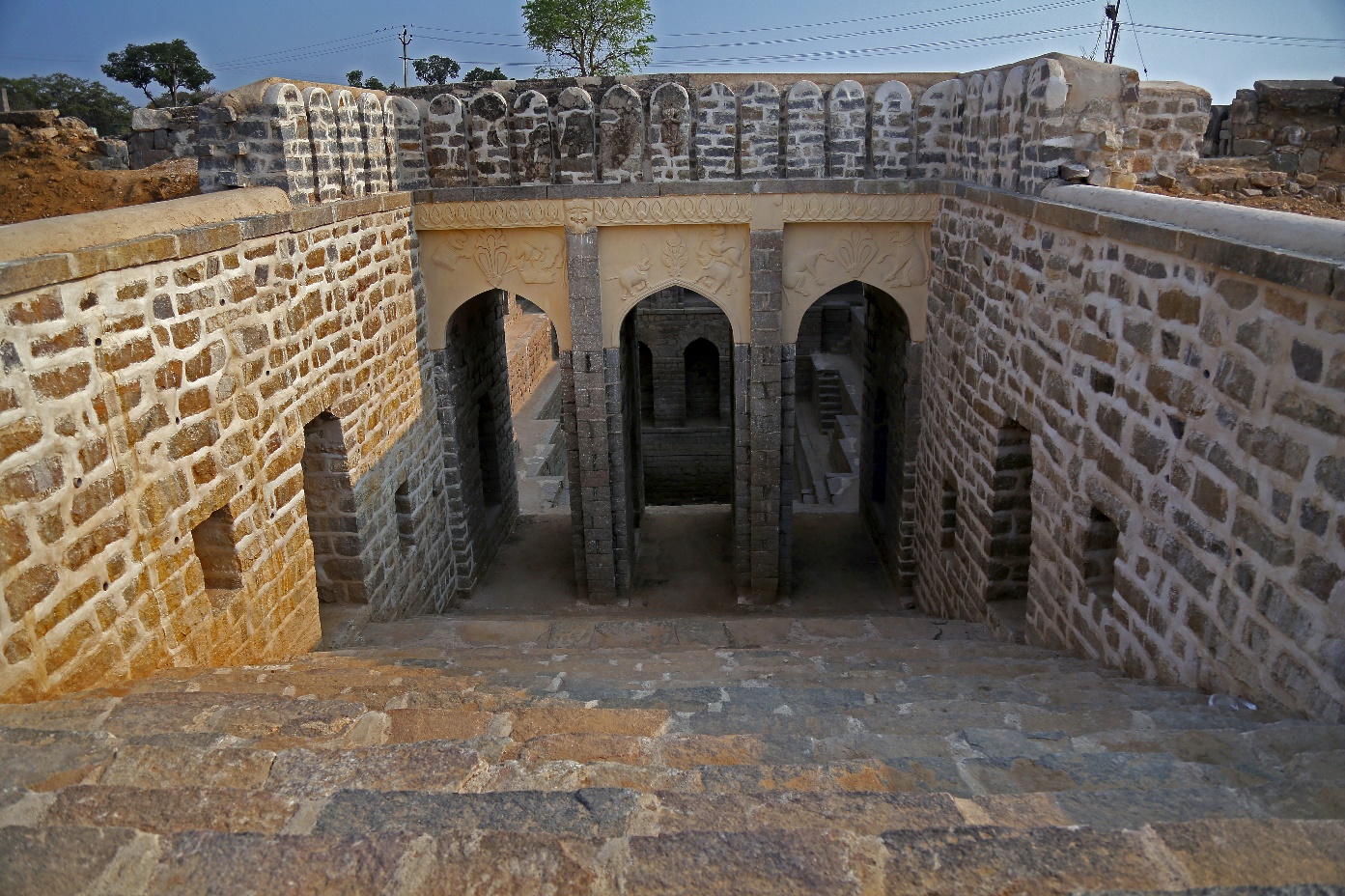
Restored & Protected Stepwell
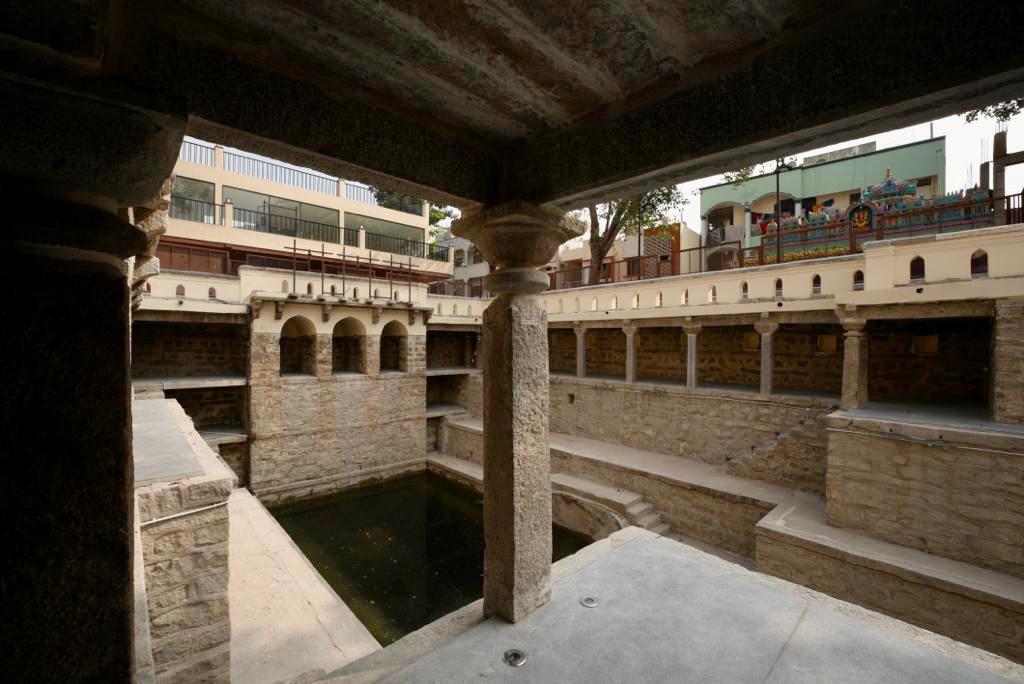
Restored & Protected Stepwell